My role: Senior product designer.
Team : Me (product designer), additional product designer, product manager, CX researcher, web developer, iOS developer, Smart TV developer, 2 Android developers, 2 backend developers, product analyst, 2 QA engineers.
Platforms: Smart TV, web, iOS, Android Mobile, Android TV
Time from idea to production: 5 months
The context
Okko is an over-the-top video streaming platform with 2.2M paying customers. It has a 14% share of the Russia market (which counts around 20 streaming platforms). Okko is a part of Sber, the largest IT company in Russia and the 51st largest in the world.
The Smart TV and Android TV client applications of Okko did not allow to register a fully functional account, as well as to authorize. At the same time, 61% of customers were using the platform only on TV. A user could buy content and start a subscription on a TV using a device-id-based phantom account, which was created for them behind the scenes. This account could then be merged with the account they have created on a non-TV device by entering a pin code.
The issues that the project set out to solve
- If a user does not have an account created via the mobile app or the web app, they can not create an account on the TV (revealed by qualitative studies, user reviews).
- There are users who have several phantom accounts on several devices. This can lead to lost purchases and buying excessive subscriptions. This also makes accurate user count hardly possible (revealed by qualitative studies, user reviews, call center load).
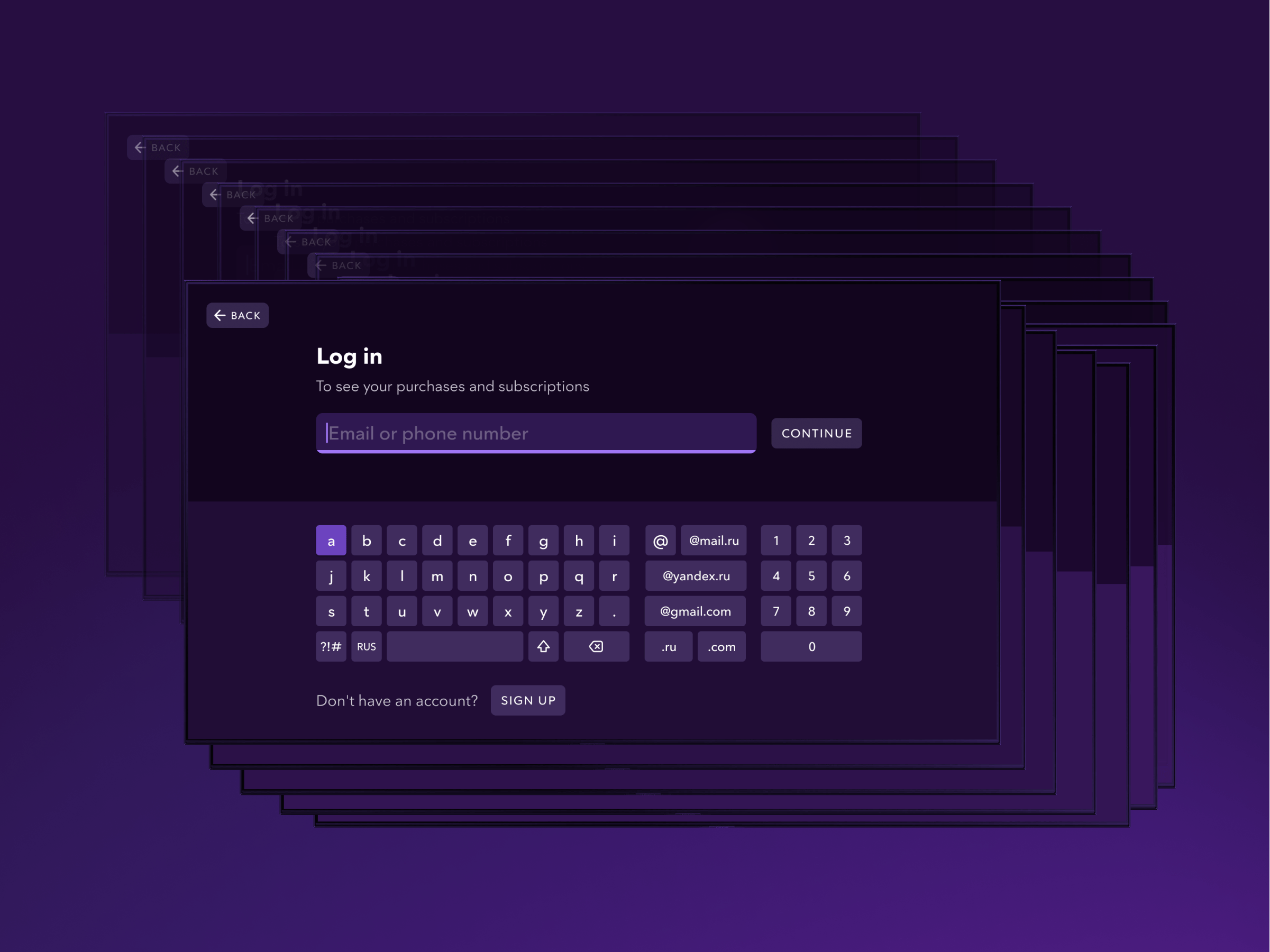
- Login and registration are handled by the same form on the front end. If a user who already has an account makes a typo in the user name while trying to login, a new user account gets created instead of logging them in (revealed user reviews, call center load).
- Tracking down pirates is hard (revealed by content protection compliance).
- It’s challenging for the marketing team to communicate with a user when they only have a data-poor phantom account.
- Web and mobile registration scenarios have potential security issues.
The hypothesis
Adding registration and authorization to TV applications would simplify user experience for the customers who use Okko only on the TV. This would make the flow more evident and lower the number of call center inquiries, as well as reduce the number of lost purchases.
A web and mobile registration rework would knock down the number of erroneous registrations caused by typos, and lower the call center load. It would increase the number of interactions between the platform and the customer, and make the platform more secure.
Eliminating the ability to buy and watch content using phantom accounts (which was possible on TV and mobile devices) would essentially mean adding a regwall before purchases. This would enable more effective marketing communication and ensure compliance with copyright owners’ requirements.
What I have done
- A number of studies have been carried out throughout the course of the project:
1. Metrics analysis with Splunk indicating the number of registrations and their type (e.g. by email, by phone number, via social login, etc.)
2. 6 Qualitative studies of various realizations of registration and authorization on TV. What interested us the most here was the comfort of using the remote control as an input source.
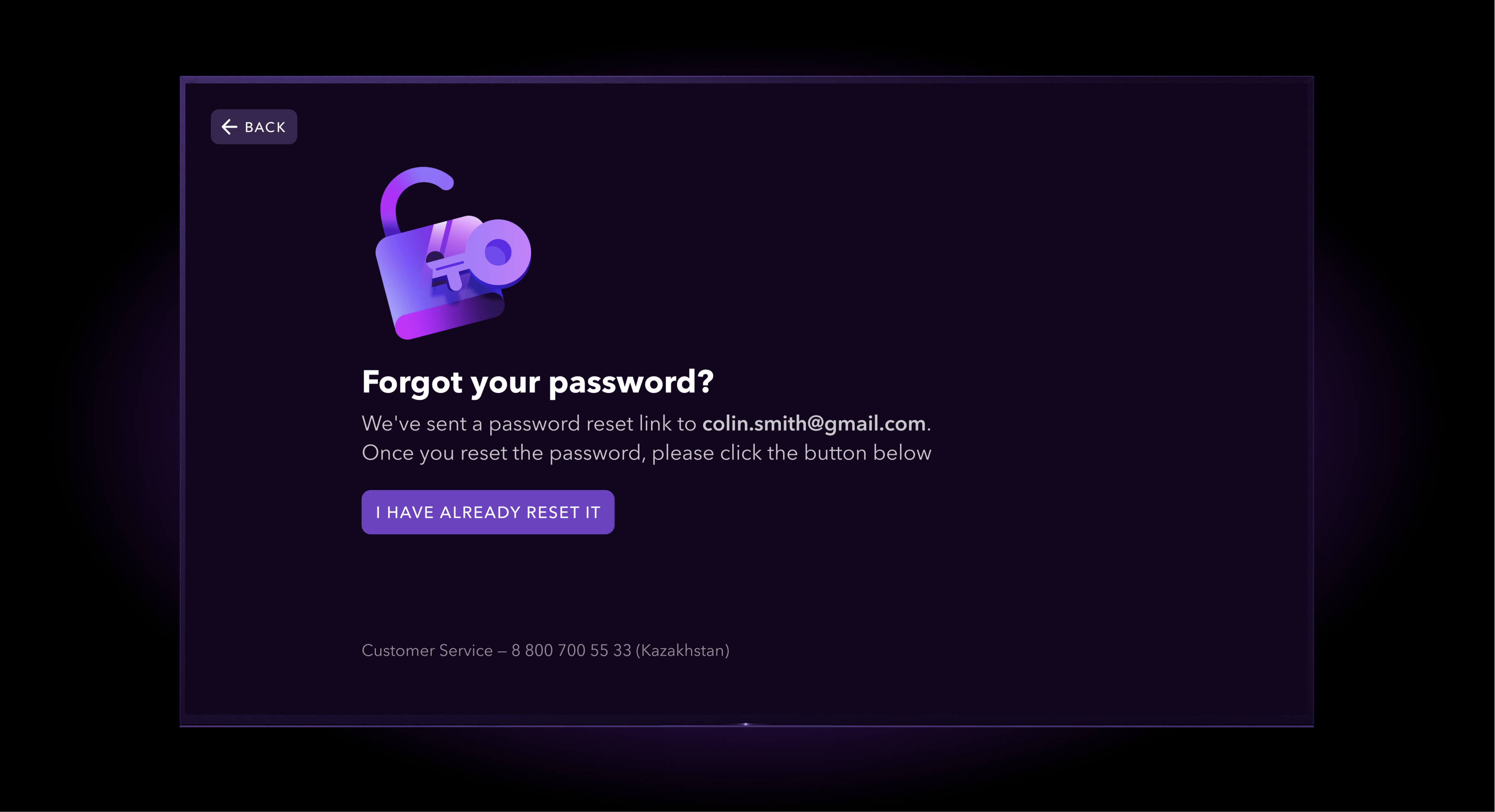
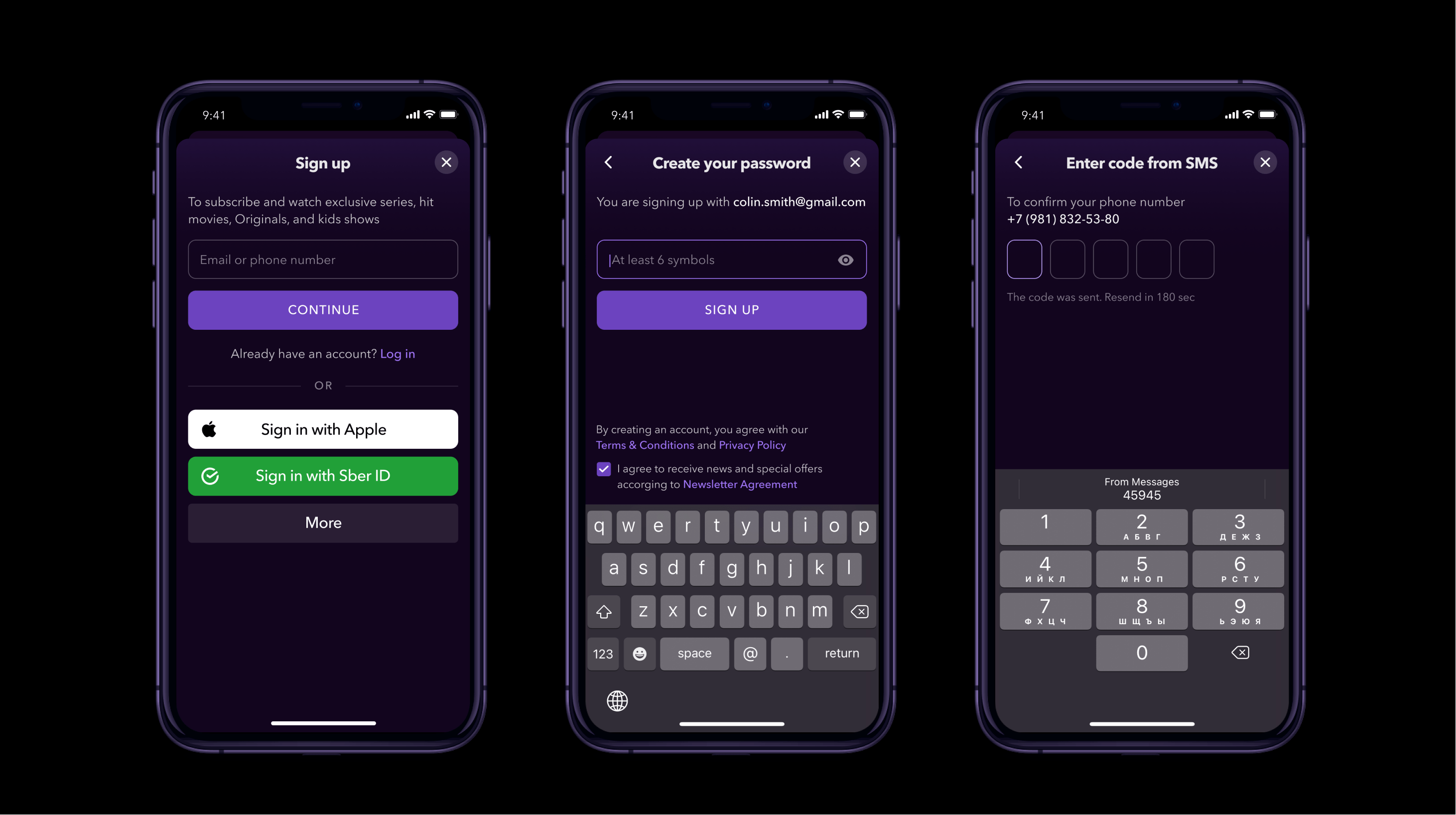
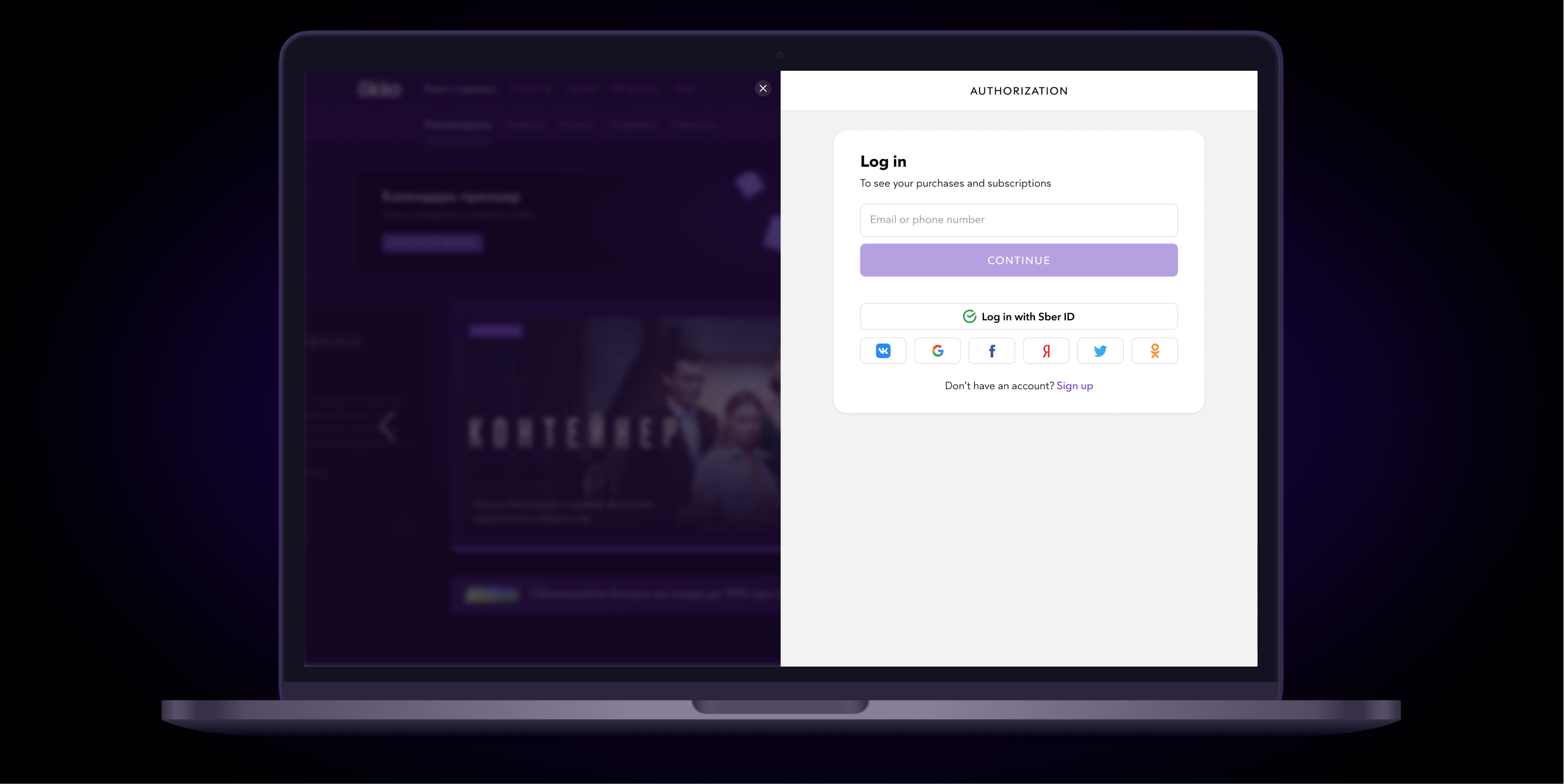
3. 2 Qualitative studies of various ways of realizing registration and authorization in web and mobile apps. - Registration and authorization has been reworked on all platforms.
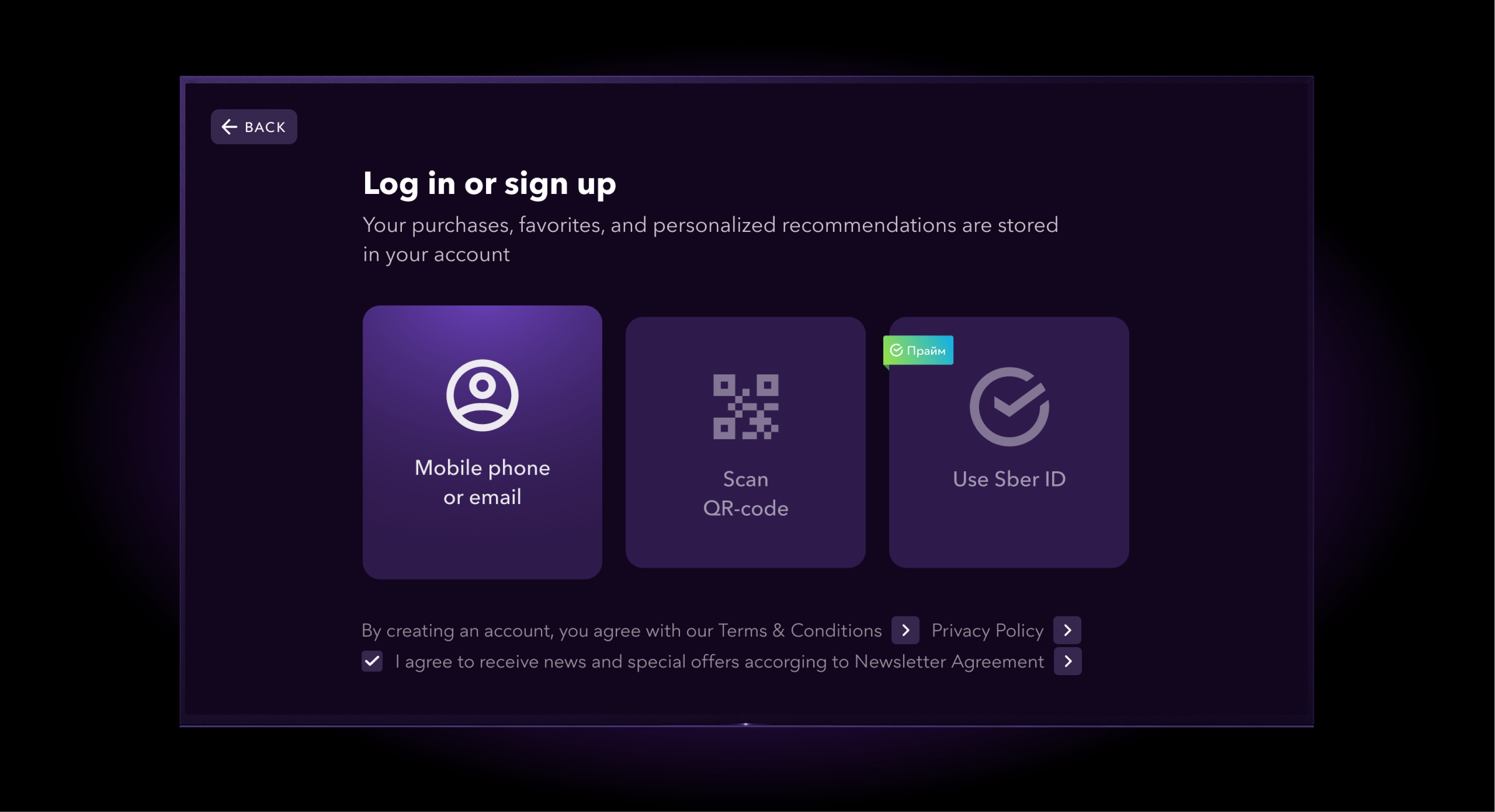
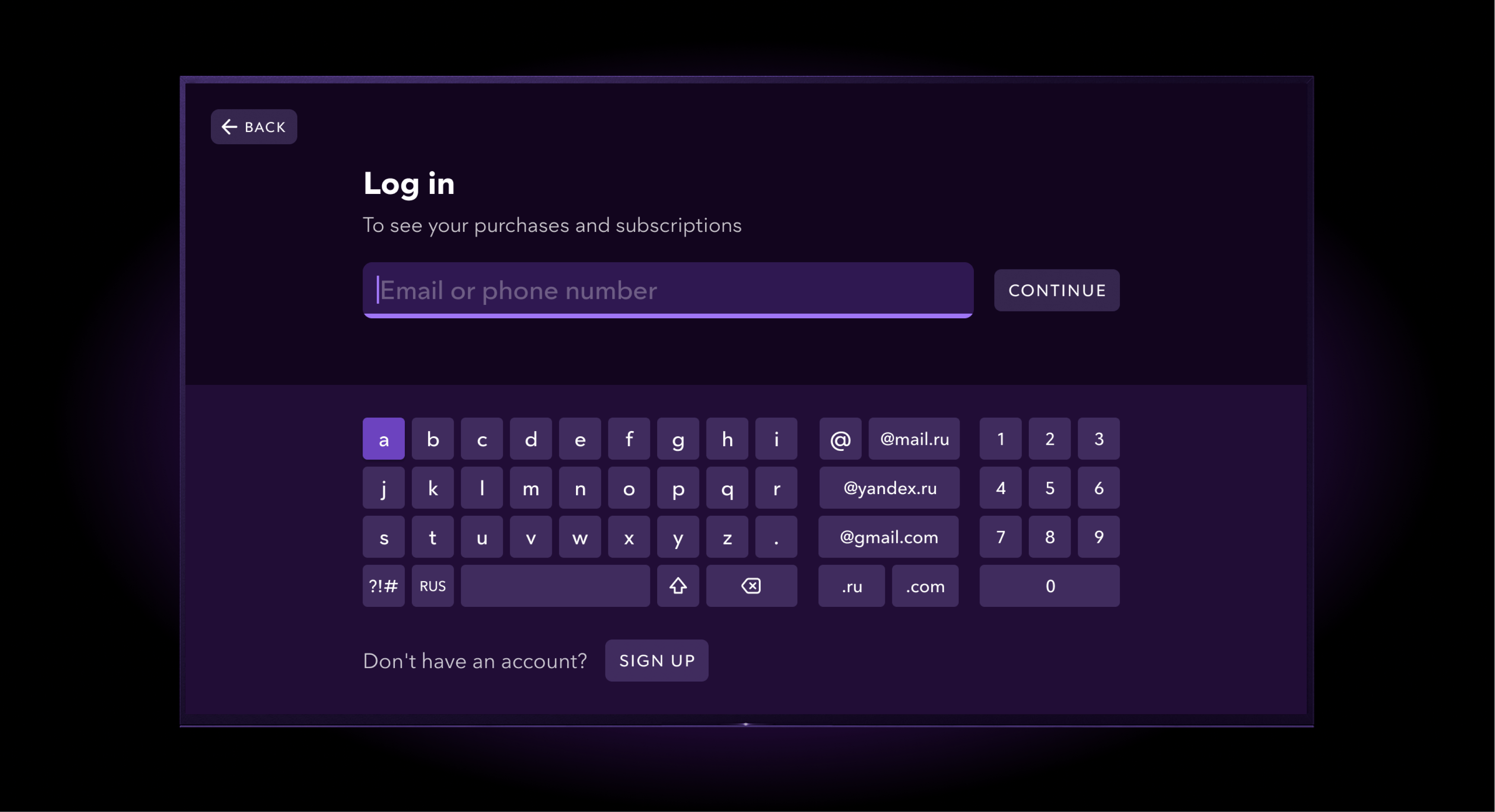
- Email and phone number based registration has been added to TV applications.
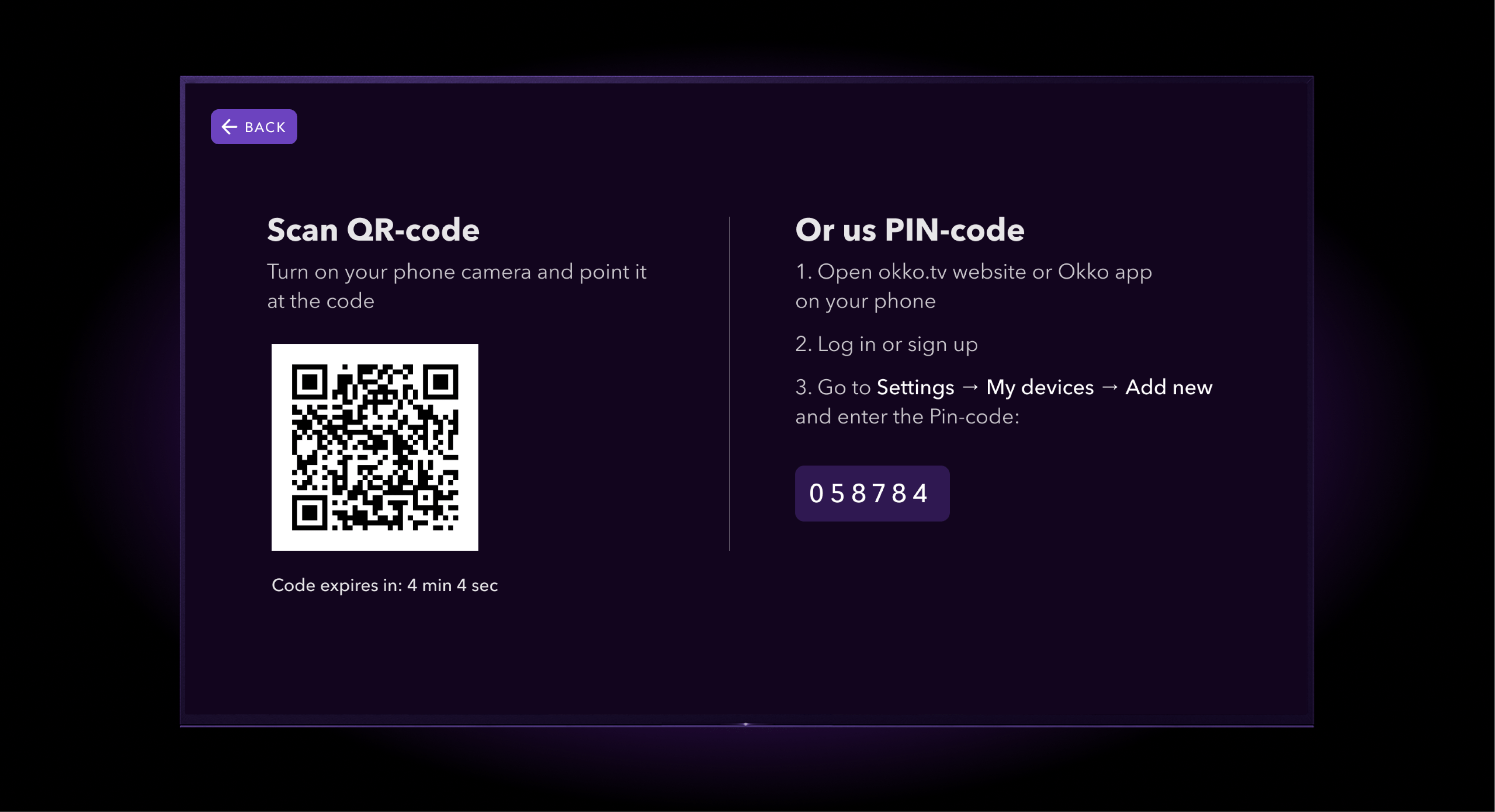
- A simplified authorization via a QR-code or a pin code has been brought to Smart TV and Android TV.
- A simplified authorization via Sber ID (over 70M users in Russia) has been brought to Smart TV and Android TV.
What has been achieved
Among the users who install the TV application for the first time, the merge of phantom accounts with full accounts (via authorization or registration) has increased to 39–41%.
In audience groups who were offered the new registration and authorization, conversion from non-registered newcomers to registered users with content watch time has increased by 2–4%. Conversion to trial periods has decreased by 2-4%.
On the whole, the UX of registration and authorization has seen a major improvement. The number of user accounts created for a given person has been aligned with reality. The possibility of future lost purchases resulting from phantom accounts has been eliminated. Compliance with copyright owners’ requirements has been achieved. And the call center load has been reduced.